
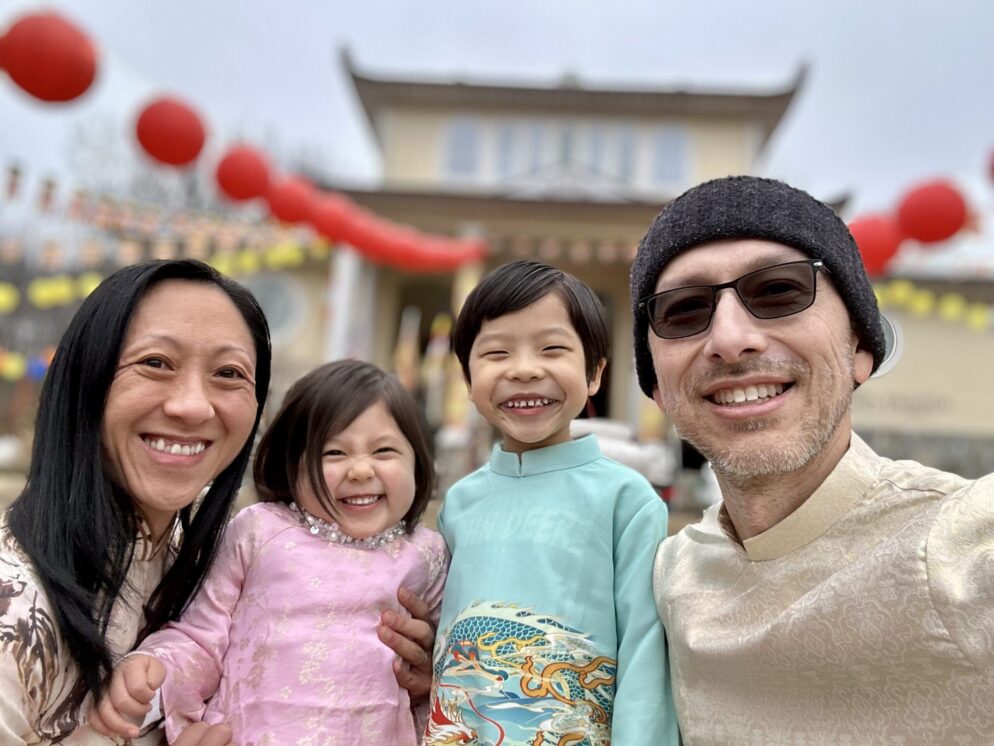
One lunar cycle is marked by 12 years, and this year of the fire horse is my 12th year as executive director, and five years since the shift to our four-day work week. When we first made the decision in 2021, I had also just become a mom, and in doing so, became the first SEARAC executive director to have a baby during their tenure. Today, my husband and I are raising two children who are 5 and 3. The leadership I am able to sustain today is not accidental, but a product of deliberate organizational decisions and policies to advocate not just for health justice for our community but also internally.
Five years later, I see three enduring lessons:
1) We proved that a counter-narrative is possible.
When we first started the policy post-COVID-19 pandemic, the team and field were depleted. The burnout was severe in a nonprofit and social justice field that was already struggling with dismal retention rates and martyrdom culture.
Our four-day work weeks tell a different possibility.
It has made possible what once felt impossible: to be a bold, visionary executive director and mom of two under 5. When my children look back at their childhoods, they will have memories of me being in their lives – not just in the minutes before leaving for work or the few minutes that remain when I have returned from a long day. They will know that my leadership was inspired by seeing their joy and hearing their laughter every day rather than built in absence.
This is not just about me. It is about modeling sustainable leadership for the movement, not just the moment.
2) We shifted the onus of wellness from individual burden to collective responsibility.
The success of our four-day work week is rooted in something critical: trust.
Trust in our team. Trust from our board. Trust in and from our funders. Trust in the clarity of our mission to say yes to what is ours and no to what is not.
In the past five years, our impact has not contracted – it has grown. We have strengthened partnerships, doubled our Congressional champions, sharpened our strategy, and increased staff retention. Not by working more hours, but working with greater alignment, clarity, focus, and collective care.
No single organization can do everything. But when each of us contributes our unique strengths with sustained care, the entire movement becomes stronger.
3) We helped normalize bold change across our ecosystem.
What began as an internal experiment has become a shared conversation. We’ve inspired and conspired with organizations to bring the four-day work week to their organizations and larger movements. These organizations have ranged in purpose from research and advocacy, to abolitionists.
The mechanics of transition matter. But what matters more is leadership courage. It takes internal will to reject scarcity thinking. It takes discipline to sustain cultural change long after the announcement is made.
Today, this milestone feels like the midpoint of my leadership journey. I am not burnt out. I am not running on fumes as I’ve experienced too many seasons before. I feel expansive – able to dream and build not just SEARAC’s next chapter, but also my family’s.
That, to me, is revolutionary.

This year also marks the fifth anniversary of my father’s passing.
My father, Dinh Van Quang, lived community care in quiet, daily acts of courage and unconditional love. He worked tirelessly for our family without ever naming it as a sacrifice. He was and will forever be our rock. As I reflect on these five years, I see more clearly how the culture we are building at SEARAC is rooted in his refugee legacy: love, family, and community through structure. Care made durable for generations to come.
This anniversary is for him.
Quyên Đinh is SEARAC’s Executive Director.
To learn more about SEARAC’s wellness policies, check out Quyen’s Workplace Wellness blog post from 2022, Creating a Culture of Community Care.
For more blogs in our WorkPlace Wellness Anniversary series, see:
- Phoebe Tran: A Season of Yes
- Katrina Dizon Mariategue: Care in Practice: How 10 Years of Sustainable Workplace Policies Makes All the Difference
- Mandy Diêc: Active Resistance as a Form of Care