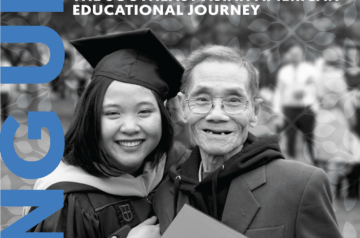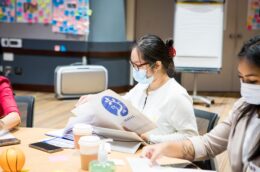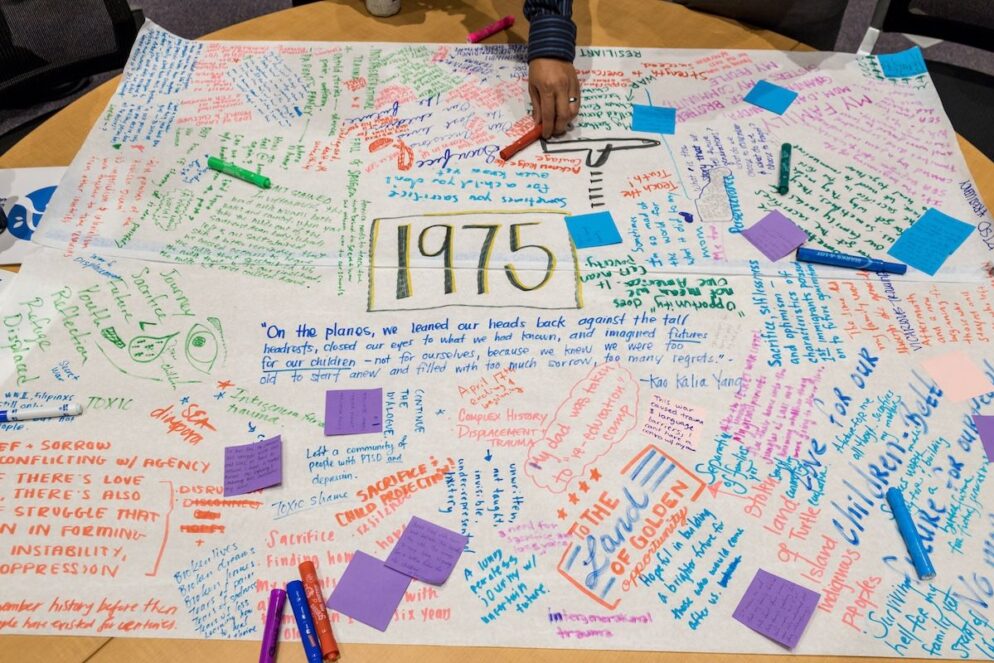
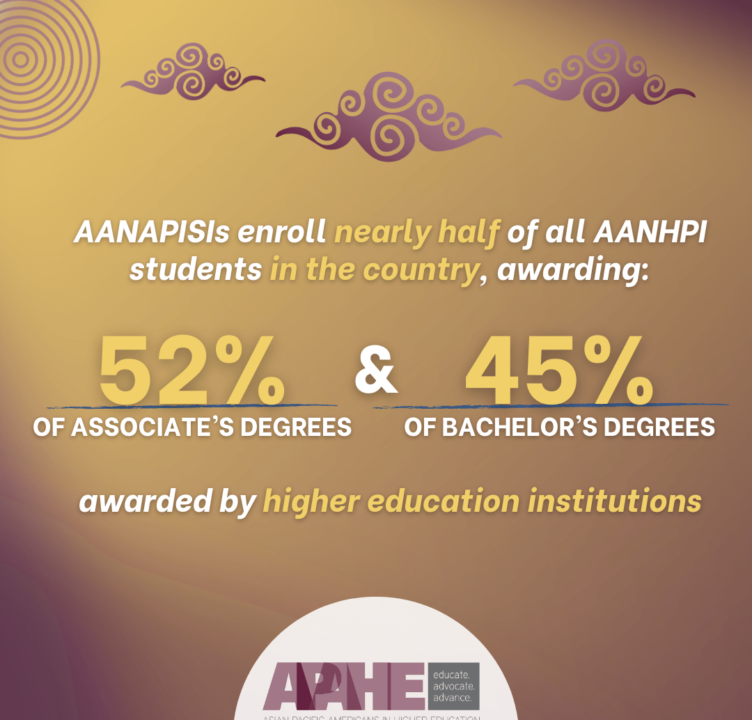
These colleges and universities are essential for increasing higher education access and success to low-income, first-generation Asian American, Native Hawaiian, and Pacific Islander students, including SEAAs.
Key resources:
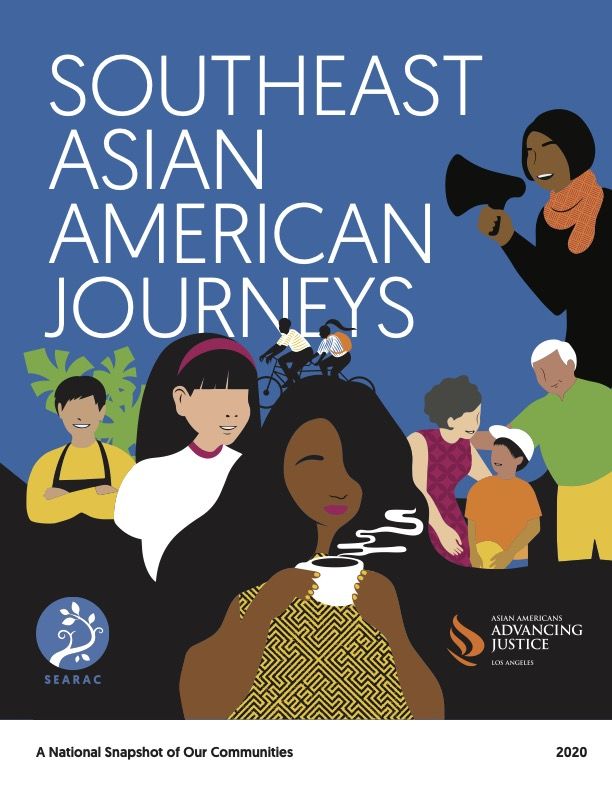


Featured story
SEARAC Commemorates the 17th Anniversary of AANAPISIs
Since its founding, AANAPISIs have served thousands of first-generation and low-income students, including Southeast Asian Americans (SEAAs).
Learn more![]()

“I think that AANAPISIs are important because it allows for Asian American students, like myself, to come together and feel a sense of belonging. This space has allowed me to build relationships I know will last a lifetime. ANNAPISIs allow for there to be a community-based foundation for Asian American students who need that.”
alumnus of Irvine Valley College, an AANAPISI located in CA
![]()
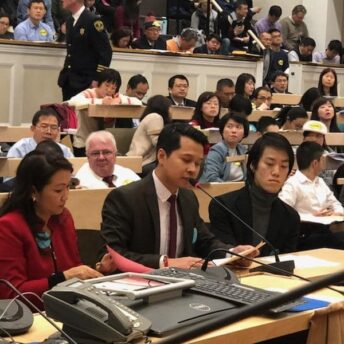
“We need to be actively thinking about creative spaces and after-school programs that encourage participation from refugee parents in preparing their children for college. More importantly, we need to address language access. Without the ability to read documents or understand robocalls, parents are further barred from being informed on their child’s educational attainment and success.”
Cambodian Mutual Assistance Association of Greater Lowell
![]()
“We need to invest far more in our school systems so that Southeast Asian American students, and all students of color, have a high quality education – at every level and no matter what path they choose to take.”
SEARAC board member
Subscribe to our newsletter for the latest updates on the SEARAC community, and to learn more about how you can get involved.
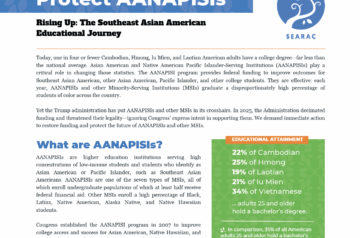
Our second finding from our new education report, Rising Up, is that lack of data prevents clear picture.
Most data groups Southeast Asian American, South Asian, and East Asian students into a single “Asian” category. This masks inequities and reinforces the harmful “model minority” myth. We need data to be broken down and disaggregated to reveal the unique experiences of Southeast Asian American communities. This will provide educators, researchers, and policymakers with information on how to better support them.
Read the full report and our newly released executive summary at bit.ly/RisingUpSEARAC
Mar 19
Get @reshare_app • @asmmiabonta As Trump ramps up his mass deportation machine, thousands of Californians are facing immigration court, one of the most complex legal systems in the country, without a lawyer and without a fair shot. These are our neighbors, our friends, our community members. Research shows that having a lawyer makes you five times more likely to win your case. AB 2600 is our chance to stand up for our neighbors and protect due process for every Californian.
Mar 18
We are breaking down the key findings from Rising Up, a new report on the state of education for Southeast Asian American students. Our first key finding is that outcomes are improving, but remain uneven across ethnicity and gender.
Community advocacy has resulted in increased supports for Southeast Asian American students and we`re seeing Southeast American students graduating from high school and enrolling in college at higher rates than previous generations. However, that progress has been uneven and includes ethnic and gender disparities. Read the full report and our newly released executive summary at bit.ly/RisingUpSEARAC
Mar 18
For our latest Workplace Wellness blog series, SEARAC Chief Operating Officer Katrina Dizon Mariategue writes about the ways SEARAC has prioritized the wellbeing of staff through sustainable workplace policies. In "Care in Practice," Katrina writes, " For any nonprofit leader looking for the solution to staff retention, it is simple: value people for their labor, and institute it in policy." Read her blog post at the link in our bio.
Mar 17
Thank you @officialcapac for hosting this event to highlight the devastating impacts of unjust detention and deportation on our communities. Quyen Đình, Executive Director of the Southeast Asia Resource Action Center (SEARAC), shared, “Southeast Asian American communities have been dealing with ICE violence for decades, with more than 15,000 people living under deportation orders to Cambodia, Laos, and Vietnam. Together, we must continue fighting against increased funding for DHS and instead advance progressive policies like the Southeast Asian Deportation Relief Act (SEADRA) to build an America that truly honors our full humanity.”
We call on Congress to keep families together and pass SEADRA. Take action at bit.ly/SEADRA2026.
Get @reshare_app • @officialcapac DHS is terrorizing AAPI communities, ripping apart families, and detaining and deporting people based on their accent or appearance.
CAPAC Chair @RepGraceMeng led a press conference with the Minnesota State Asian Pacific Caucus and community organizations to demand accountability from DHS.
Mar 13