

Learning about the histories, culture, and experiences of our diverse communities, including SEAAs, benefits all students.
Key resources:


Featured story
Model Curricula on Vietnamese, Cambodian, and Hmong Experiences Now Available
Sacramento, CA – SEARAC is thrilled to announce that the website on the California Department of Education’s ethnic studies model curricula on Cambodian American Studies, Hmong History and…
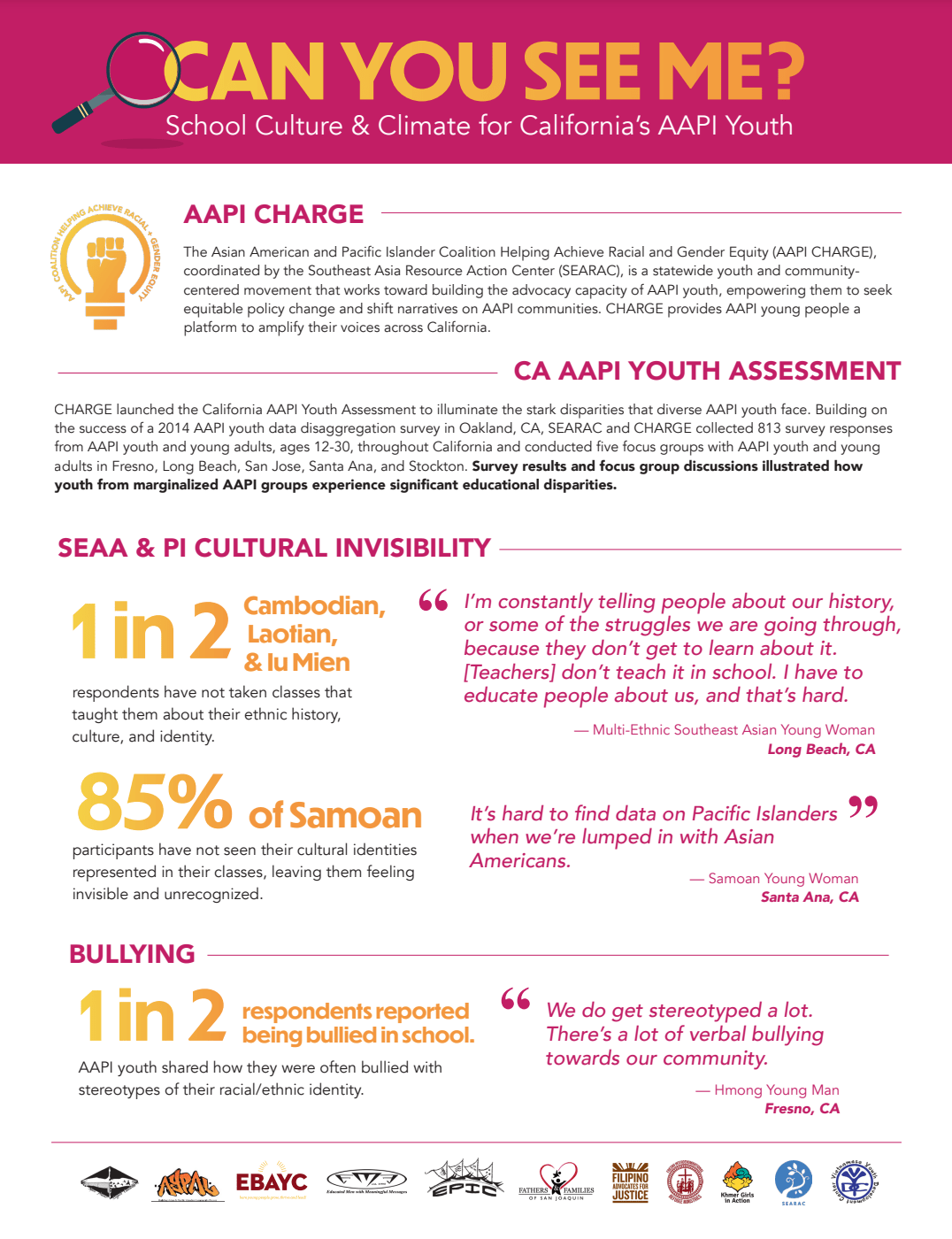
Learn more“I’m constantly telling people about our history, or some of the struggles we are going through, because they don’t get to learn about it. [Teachers] don’t teach it in school. I have to educate people about us, and that’s hard.”
From our “Can You See Me” report
“Next year, it will be 50 years since our Hmong families left their homeland to escape war and come to America, and yet many people still don’t know why we are here and who we are.”
AAPI Coalition of Wisconsin
“Recognizing the Laotian refugee experience in our schools not only provides Southeast Asian American youth with the visibility, acknowledgment, and celebration they deserve but also enriches the education of all students by deepening their understanding around a subject that is historically overlooked.”
Laotian American National Alliance

“Ethnic studies is particularly important for Asian Americans because the racialization of Asian Americans is deeply haunted by American and European military intervention and imperialism in Asia and the foundations of settler-colonialism and anti-Blackness in the United States.”
SEARAC intern
Subscribe to our newsletter for the latest updates on the SEARAC community, and to learn more about how you can get involved.
Latest related posts





Since 2018, SEARAC has convened the Southeast Asian American Collaborative, comprising 17 SEAA community-based organizations across California. Our latest blog post spotlighted Collaborative member @hipcalifornia.
Read more from HIP Director of Policy and Partnerships Kao Ye Thao, who offers her reflections on people power and what federal advocacy can look like. Link in bio.
Sep 3


Reposted from @npquarterly • Twelve percent of Asian American adults ages 25 and older have not finished high school.
(For Cambodian adults, the rate is 28 percent.)
When federal agencies Southeast Asian American communities only within an imprecise “Asian American” category, disparities like this are obscured.
In this piece, Quyên Đinh, executive director of the Southeast Asia Resource Action Center, explains why collecting and reporting data by ethnicity is a civil rights issue—and how Southeast Asian American leaders are fighting for it.
Data does not simply describe who lives here. It influences which disparities the government recognizes—and addresses.
✍🏽: Quyên Đinh of Southeast Asia Resource Action Center
🔗: Link in comments and bio under #WeTheCivic
#WeTheCivic #DataEquity #SEAAVoices
Sep 2

🚨🆕! APIAVote and AAPI Data, in collaboration with NCAPA, have produced the 2026 AAPI Voters Data and Narrative Toolkit ahead of this November’s elections. AAPI voters are the fastest-growing voter demographic with tremendous potential to impact the outcome in key races across the country. Outreach to these communities needs to be prioritized, and this toolkit is meant to help elevate that argument to news media, funders, campaigns, elected representatives, and other relevant stakeholders to better understand and engage AAPI communities! 🗳️📢
This toolkit provides a standardized, evidence-based, and field-tested set of facts and messaging resources for AAPI community organizers and advocates and will be updated as new data becomes available.
🔗 Explore today at the link in bio!
#MidtermElections #AAPIVoters #AAPIElectorate #VoterData
Aug 31

Have you already taken action to ensure AANHPI students are seen and supported?
SEARAC, NCAPA, and more than 50 organizations are calling on Congress to cosponsor the All Students Count Act. The bill would provide more detailed education data to help schools better understand student outcomes and direct resources where they are needed most.
Join us in urging your representative and senators to act. Take action at the link in our bio.
#AllStudentsCount #AANHPI #EducationEquity #DataEquity #BackToSchool
Aug 28

SEARAC and AAPI Data’s latest fact sheet, Southeast Asian American Deportations: Trends and Policy Implications, makes one thing clear: we must act now to keep our families together.
Southeast Asian American communities are being targeted at an alarming rate, with 42% of ALL Southeast Asian deportations since 1998 happening in just the last two fiscal years, including a more than 20x increase in deportations of our elders. People who have called the United States home for decades, many since childhood, are being sent to countries they no longer have connection to. We need policy solutions that ensure dignity for our communities and respect for human life. Read the fact sheet and our policy recommendations at the link in our bio or bit.ly/seadeportationtrends2026
@searac @aapidata
Aug 27
